inquiry
Leave Your Message
0%

Picking the right GPS RTK antenna really matters when it comes to getting Precise Positioning and smooth surveying results. With so many options out there, I get how it can be pretty overwhelming to make the best choice. Every project has its own quirks, so it’s super important to know exactly what you need. Whether you're into agriculture, construction, or just about any other field, finding the right antenna can seriously boost your overall efficiency.

There are a bunch of factors to keep in mind. Things like the antenna’s frequency range, gain, and how tough it is built—these all matter. Do you need pinpoint accuracy, or do you need something sturdy that can handle tough outdoor conditions? Sometimes folks forget to consider how environmental stuff—like rain, buildings, or even trees—can mess with signals.

Oh, and a quick tip: just because an antenna is cheap doesn’t mean it’s gonna cut it, and splurging on a fancy model isn’t always necessary if your needs are simple. It really pays to do some homework. Think about what’s essential for your work, and that can help point you toward the perfect GPS RTK antenna for your projects.

How to Choose the Best Wholesale GPS RTK Antenna for Your Needs?

Understanding the Basics of GPS RTK Technology

GPS RTK (Real-Time Kinematic) technology is a game changer in precision positioning. It enhances accuracy in GPS data collection. Typically, it achieves centimeter-level accuracy. Industry reports indicate that RTK applications are climbing steadily, particularly in agriculture and construction sectors. This technology relies heavily on a network of fixed reference stations. These stations communicate with mobile receivers to provide correction data in real time.

Understanding how GPS RTK works is crucial. It uses carrier-phase measurements and a network of base stations. A common misconception is that high-end GPS devices guarantee better performance. In reality, the antenna's design plays a significant role. A poorly designed antenna can lead to signal loss, affecting accuracy. Additionally, environmental factors—like tall structures and foliage—can hinder performance.

Deciding on the right RTK antenna is complex. It requires assessing factors like frequency coverage and signal integrity. According to recent surveys, nearly 30% of users faced issues with signal reliability. Many still rely on trial and error. This slow approach can lead to frustration. Ideally, a good wholesale supplier provides detailed specifications. Users need to weigh their specific needs against available options.

Key Features to Consider in GPS RTK Antennas

When selecting a wholesale GPS RTK antenna, several key features are crucial. The frequency range is one vital aspect. Most antennas operate on specific bands like L1 and L2. These frequencies impact accuracy and range. Consider how these bands meet your project requirements. A broader frequency range may enhance performance in various environments.

Another important factor is gain. It determines how well the antenna will receive signals. Higher gain antennas can pull in weaker signals from satellites. This is particularly helpful in challenging landscapes. However, be aware that too high a gain may also amplify noise. Balancing gain to optimize performance requires careful consideration.

Durability is also essential. RTK antennas often face harsh conditions. Rain, dust, and extreme temperatures can affect their lifespan. Look for antennas with robust materials and weatherproofing features. This ensures longevity and reliability over time. A quality antenna should withstand the elements while delivering precise data.

How to Choose the Best Wholesale GPS RTK Antenna for Your Needs? - Key Features to Consider in GPS RTK Antennas

Feature Description Importance Typical Range
Frequency Range Covers various GNSS signals (GPS, GLONASS, GALILEO, etc.) High L1, L2, L5 bands
Antenna Gain Amplification of the GPS signal for better accuracy Very High 20 dB to 40 dB
Phase Center Stability Consistency of the antenna's signal phase High ± 1 mm
Physical Dimensions Size and weight of the antenna for portability Medium Size varies 10 cm to 20 cm; weight 0.5 kg to 2 kg
Durability Resistance to environmental factors (waterproof, dustproof) High IP67 or IP68 ratings
Cost Price range affecting overall budget Medium $100 to $2000

Types of Wholesale GPS RTK Antennas Available

How to Choose the Best Wholesale GPS RTK Antenna for Your Needs?

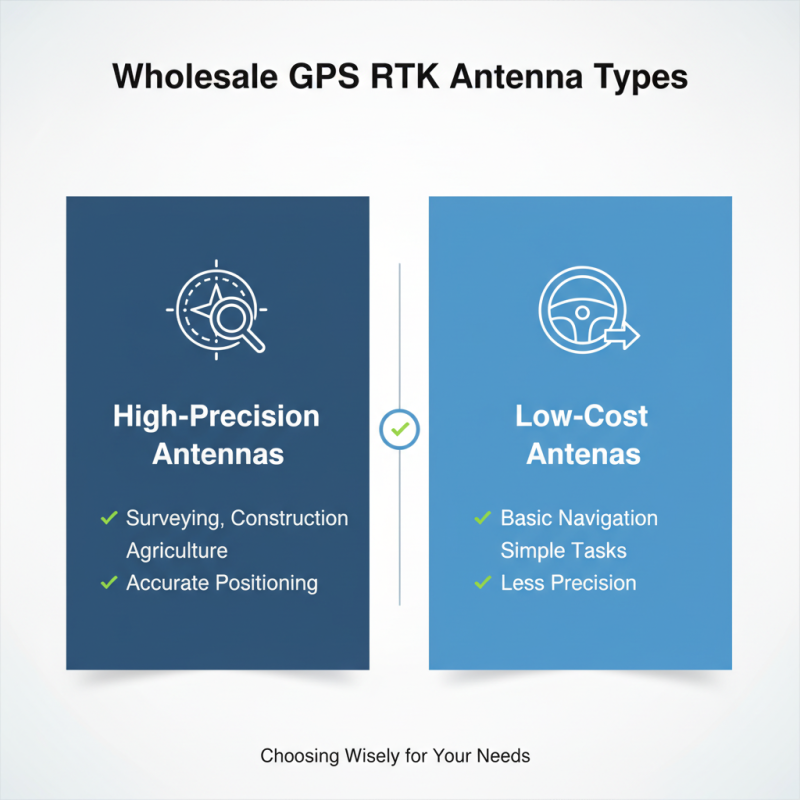
When choosing a wholesale GPS RTK antenna, understanding the types available is crucial. Several varieties exist, catering to different requirements. For instance, high-precision antennas are ideal for surveying. They provide accurate positioning data for construction and agricultural applications. Another type is the low-cost antenna, which works for basic navigation. These antennas may lack the precision of their higher-end counterparts but are suitable for simple tasks.

It's important to consider the frequency range as well. Most antennas operate on L1, L2, and L5 frequencies. L1 is common but may not suffice for project requiring high precision. L2 offers better accuracy and can reduce errors due to multipath effects. For those looking ahead, L5 is an emerging frequency aimed at improved reliability.

**Tip:** Always check the antenna's gain. A higher gain usually results in better performance. A common oversight is not verifying compatibility with existing systems. Ensure the antenna works well with your GPS receiver. Not matching components can lead to frustrating experiences.

Finding the right type often involves weighing cost against functionality. Sometimes, spending more upfront saves future headaches. Before purchasing, consider your current and future needs carefully. Gauge how the antenna will perform in various environments.

Evaluating Signal Strength and Accuracy Requirements

How to Choose the Best Wholesale GPS RTK Antenna for Your Needs?

When selecting the best wholesale GPS RTK antenna, signal strength and accuracy are paramount. A robust signal enhances the antenna's performance. Factors like frequency and environment affect signal quality. Dense urban areas may disrupt signals. Open fields can provide clearer reception. Understanding your operational environment helps in making the right choice.

Accuracy is another critical aspect. Different applications require varying levels of precision. For surveying, a few centimeters may suffice. However, in high-stakes scenarios, millimeter-level accuracy is essential. Check specifications carefully. Some antennas perform well under certain conditions but struggle in others. It's important to balance your accuracy needs with signal stability. Consider testing different setups to see what works best in your specific situations.

Assessing Compatibility with Existing Equipment

When selecting a wholesale GPS RTK antenna, compatibility is crucial. Check the specifications of your existing equipment first. The antenna must work with various receivers and base stations. Look for frequency ranges that match your current system. Many antennas operate at specific frequencies, so don’t assume they will all work together.

Additionally, consider the connector types. Mismatched connectors can hinder performance. An improper fit might lead to signal loss or connectivity issues. If necessary, have adapters on hand. This can solve connection problems, but it’s often a temporary fix.

Remember that not all antennas are equal. Some have a stronger signal, while others may offer better range. If your current system has particular requirements, make sure the new antenna meets them. Take time to read feedback from other users. Real experiences can help steer you in the right direction. Ensure that your choice aligns with your long-term goals. Compatibility is not just about hardware; it affects overall efficiency too.

Budget Considerations for Wholesale Purchases

When considering budget for wholesale GPS RTK antennas, clarity is key. A recent industry report highlighted that the average cost per unit for medium-grade antennas ranges from $500 to $1,200. This pricing can significantly impact your overall investment. If you're purchasing in bulk, be aware of economies of scale. Larger orders often come with discounts, but ensure that quality isn't compromised for cost.

Additionally, it's important to evaluate potential hidden costs. Installation fees, shipping, and duties can add up quickly. These expenses can sometimes exceed the initial savings from bulk purchasing. A study indicated that 25% of companies overlooked installation costs when budgeting, leading to unexpected financial strain.

As you assess your options, consider asking suppliers for detailed pricing structures. Transparency in pricing can help prevent costly surprises later. This diligence can be the difference between a successful project and an over-budget failure. Always remain cautious and reflective about your choices.

Where to Source Reliable Wholesale GPS RTK Antennas

When sourcing reliable wholesale GPS RTK antennas, quality is key. Look for suppliers with a proven track record. Reports indicate that nearly 70% of users prioritize durability and precision. Many antennas may provide good results, but not all can withstand harsh conditions.

Check the specifications carefully. A good antenna should have a high gain and low signal-to-noise ratio. Data suggests that antennas with a gain of over 30 dB can perform significantly better in challenging environments. It's also wise to verify any certifications the antennas may have. Antennas without standard certifications often underperform.

Networking is vital in this industry. Join forums or attend trade shows. Discuss with other professionals to gather insights on sources. Some users report that smaller suppliers often provide more personalized service. However, remember they may lack scalability. Research, test different products, and ensure they meet your project needs. The right source can greatly enhance overall project efficiency.

Comparison of Key Features of GPS RTK Antennas

This chart provides a comparison of five different GPS RTK antennas based on their accuracy, range, and price. It helps you understand the trade-offs between these key features when selecting a wholesale GPS RTK antenna for your needs.

FAQS

: What types of products are typically available?

: Many categories exist, including clothing, electronics, and home goods. New items appear regularly.

How can I find specific items?

Use search filters to narrow results. Keywords help identify exact products.

Are there any membership benefits?

Members may enjoy discounts, early access to sales, or exclusive items. Benefits differ widely.

What should I do if I receive a damaged item?

Contact customer support immediately. Provide images of the damage for a faster resolution.

How is my information protected?

Secure systems encrypt data. However, no system is infallible, and risks exist.

Can I change or cancel my order?

Changes are possible within a short timeframe. After that, cancellation may not be feasible.

What is the typical shipping time?

Standard shipping can take several days. Delays may occur due to high demand or weather.

Are returns easy to process?

Generally, returns are straightforward, but policies can be confusing. Always check specific requirements.

How can I provide feedback?

Look for surveys or contact options online. Feedback helps improve future experiences.

Is customer support available?

Yes, customer support is usually accessible through various channels. Response times may vary.

Conclusion

When selecting the best wholesale GPS RTK antenna, it's essential to start by understanding the fundamentals of GPS RTK technology, which enhances positional accuracy for various applications. Key features to consider include signal strength, durability, portability, and ease of installation. Different types of GPS RTK antennas are available, each suited for specific needs depending on their operational environment and intended use.

Evaluating signal strength and accuracy is crucial, as this directly impacts the performance of your GPS RTK antenna. Compatibility with existing equipment must also be assessed to ensure seamless integration. Additionally, budget considerations play a significant role in making wholesale purchases. Finally, sourcing reliable suppliers for GPS RTK antennas is vital to ensure quality and performance, which can greatly influence your operations. Understanding these aspects will guide you in making an informed decision that aligns with your requirements.


Elena

Elena

Elena is a dedicated marketing professional at Shanghai Apekstool (APEKS), a leading provider of innovative geospatial surveying and mapping products. With a deep expertise in GNSS/GPS systems, total stations, levels, and theodolites, she plays a crucial role in communicating the core benefits and......
Previous Top 10 RTK Col Antenna Manufacturers from China at the 137th Canton Fair
Next Top 5 Rtk Gnss Receiver Options to Boost Accuracy?